
Industrial Engineering
Industrial Systems Optimization and Analytics Laboratory
A laboratory for strengthening the analysis, modelling, and optimization of industrial systems.
Head: H. Dadang Arifin, S.T., M.T., IPM.
“A Commitment to Integrity and Improvement”
Expertise groupManufacturing Systems
A laboratory developing manufacturing-systems studies, covering the planning, design, control, and development of production processes for effective, efficient, productive, and integrated manufacturing systems.
Parts of this page are available in Indonesian only.
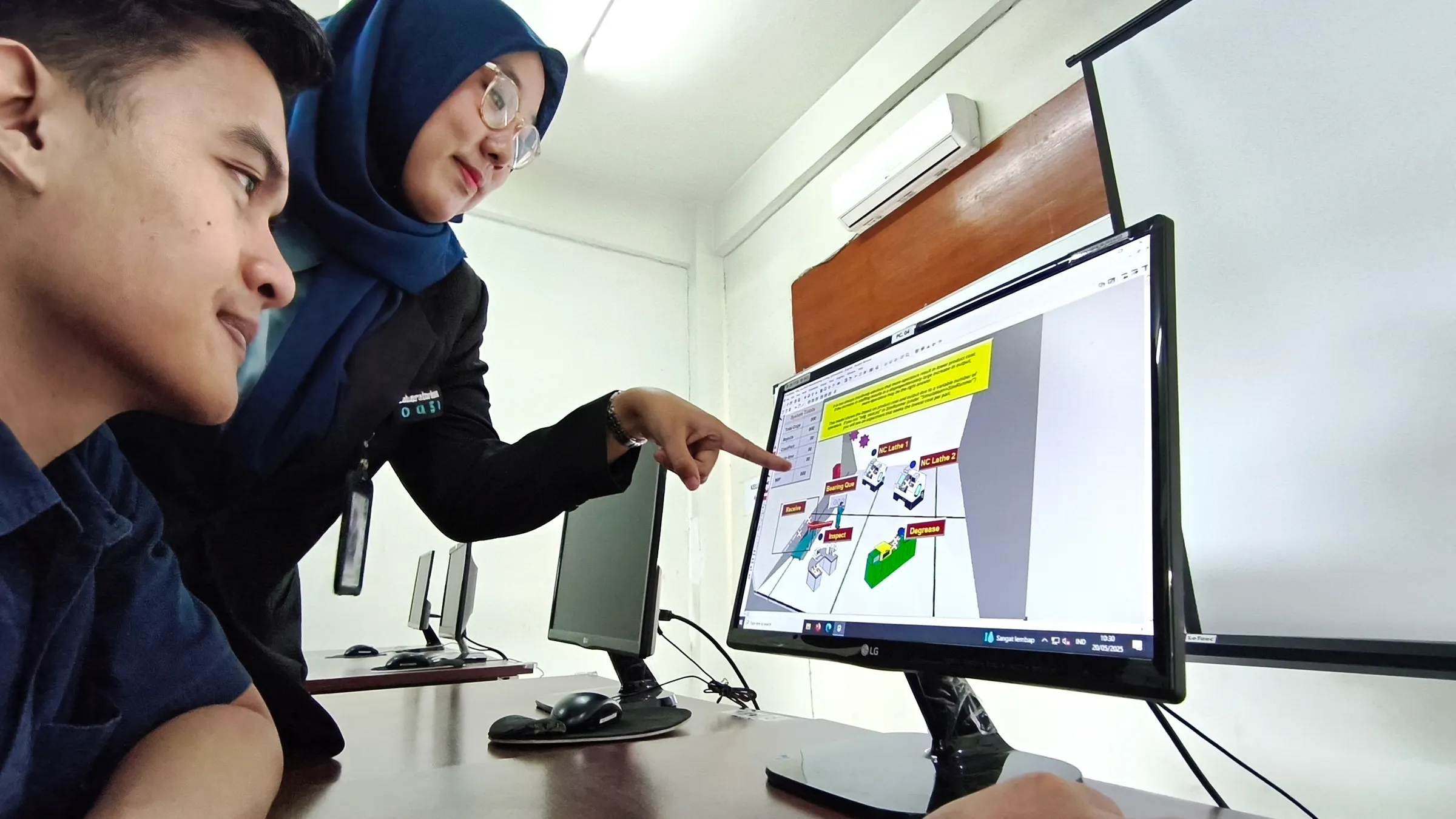
The Industrial Engineering Design Laboratory (LPTI) is one of the laboratories of the Department of Industrial Engineering, Universitas Jenderal Achmad Yani (UNJANI), within the Faculty of Manufacturing Technology, and belongs to the Manufacturing Systems expertise group (KBK).
The laboratory focuses on developing manufacturing-systems studies, covering the design, planning, control, and improvement of production processes to create effective, efficient, productive, and integrated manufacturing systems.
LPTI also hosts practicum activities that support student learning and serves as a place to build competence through research and training in manufacturing systems and industrial design.
LPTI supports student research on analysing and developing production systems, production planning and control, facility layout design, production scheduling, and quality control. These studies aim to optimise resource use, raise productivity, and deliver manufacturing systems that can adapt to industry needs.
3 courses · 8 credits
Gambar Teknik & Metrologi
TI603017 · Semester 2
Proses Manufaktur
TI603021 · Semester 3
Perancangan Teknik Industri 2
TI603041 · Semester 5
A practicum on the fundamentals of engineering drawing and the application of measurement in industry. Students learn to read, create, and interpret technical drawings, and to use a range of measuring instruments to measure dimensions and verify that a component meets its specifications.
A practicum on the processes that turn materials into useful products. Students learn the working principles of manufacturing machines, machining, material forming, and production stages, so they understand how manufacturing technology is applied in industry.
A practicum on applying the design and development of manufacturing systems. Students learn to analyse problems in production processes, plan and design work systems and production facilities, and develop improvements that raise the effectiveness, efficiency, and productivity of industrial systems.
Research on designing, developing, and improving manufacturing systems for effective, efficient, and productive production processes.
Research on production requirements planning, demand forecasting, capacity planning, production scheduling, and inventory control to optimise production activities.
Research on developing manufacturing technology, selecting production processes, optimising machining, processing materials, and improving product quality.
Research on product design development, component design, interpreting technical drawings, and applying technical standards and specifications in product development.
Research on dimensional measurement, evaluating measuring-instrument accuracy, geometric tolerance analysis, and product quality control to ensure conformity with specifications.
Research on designing and improving production facility layouts, material flow analysis, space requirement planning, and optimising facility use for smoother production.
Skills training in engineering design software for creating and editing two-dimensional (2D) and three-dimensional (3D) drawings. The training equips participants to produce precise technical designs that follow engineering drawing standards in support of manufacturing.
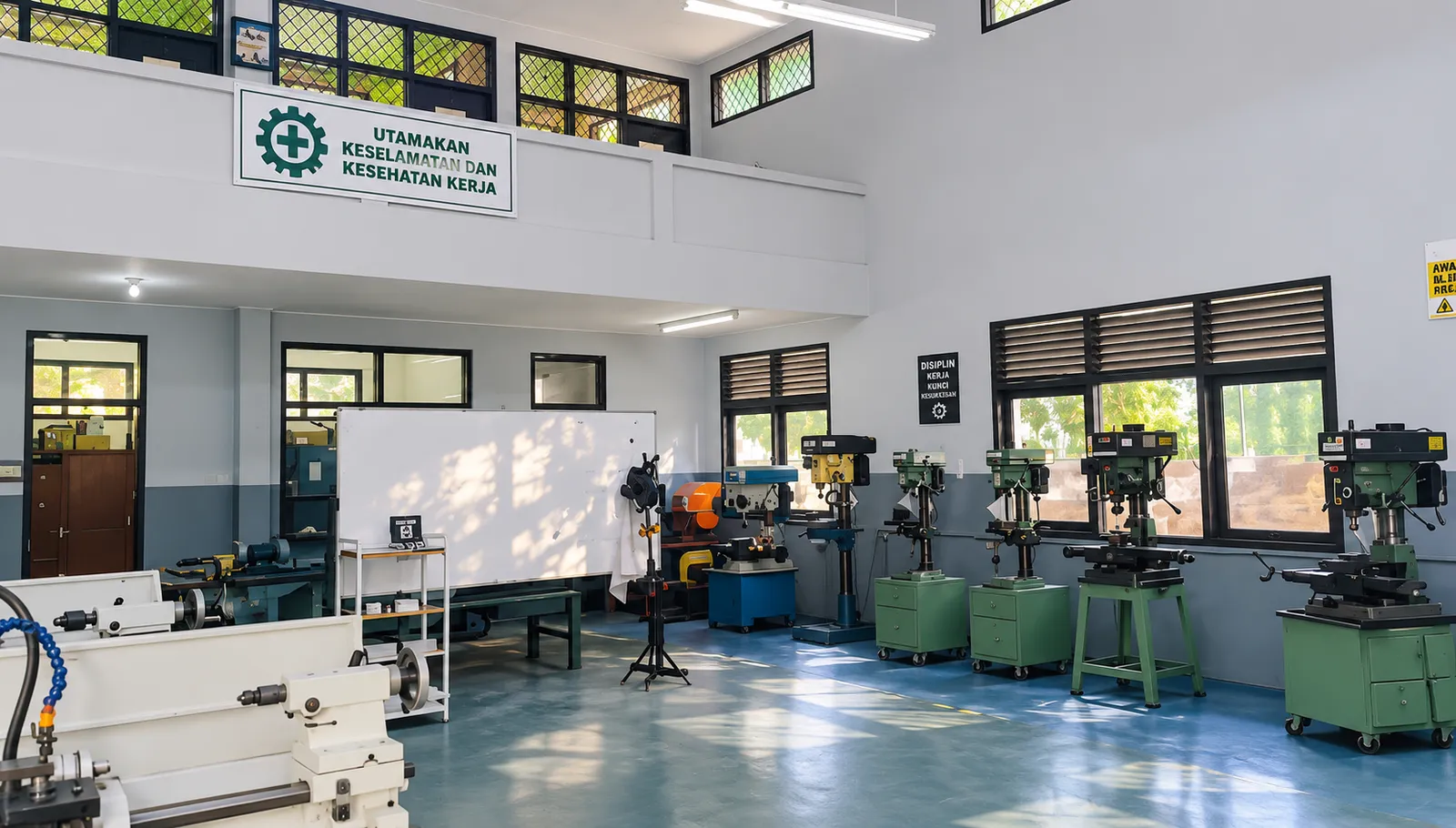
A machine tool that cuts and shapes material with a rotating milling cutter to produce workpiece shapes, slots, and surfaces to specification.
A machine tool that makes holes in a workpiece with a rotating drill bit to the required size and depth.
A machine tool that shapes a workpiece by rotating it against a cutting tool, producing cylindrical forms and specific profiles.
Hand tools for manual material work, such as files, saws, hammers, and measuring instruments, used to shape, cut, finish, and fit workpiece dimensions.
Industrial Engineering
A laboratory for strengthening the analysis, modelling, and optimization of industrial systems.
Head: H. Dadang Arifin, S.T., M.T., IPM.
Industrial Engineering
Ergonomics expertise group
“Because of Human Being”
Head: Sifa Nurul Islam, S.P., M.T.

Faculty Laboratory · Bachelor's
Laboratorium Fisika adalah fasilitas untuk mahasiswa mempelajari dasar-dasar ilmu fisika.
Head: Wiwin Widaningrum, S.T., M.T.